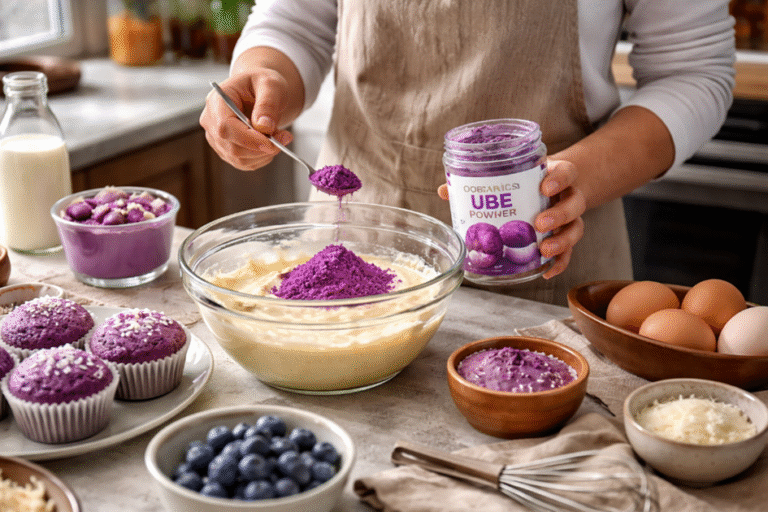
What does ube taste like?

Imagine cutting into a vibrant purple root that smells faintly like vanilla and coconut. That’s ube a staple in Filipino cuisine that’s quietly taking over bakeries and ice cream shops worldwide. But its vivid colour isn’t its only defining trait. People often wonder: does it taste like sweet potato? Is it nutty, earthy, or sugary? The answer isn’t so simple. Ube has a flavour that blends familiar sweetness with a subtle complexity a profile that’s both comforting and intriguing. If you’ve never tasted it before, it’s hard to compare it directly to anything else. But that’s exactly what we’ll unpack here: a deep, sensory look into the taste of ube, how it’s used, and why it’s becoming a star ingredient around the globe.
Understanding the natural flavour of ube
Ube, or Dioscorea alata, is a type of purple yam native to Southeast Asia and widely used in Filipino cuisine. While its colour often draws the most attention, it’s the taste that creates lasting curiosity. So, what does ube really taste like? In its purest form, ube has a mild, subtly sweet flavour with notes that resemble vanilla, coconut, and hints of pistachio. Some people also describe a touch of floral undertone soft and earthy, but never overpowering. The texture when cooked is creamy and starchy, similar to a baked sweet potato but smoother on the palate.
When mashed or turned into jams like ube halaya, this natural sweetness becomes more pronounced. Add a bit of condensed milk or coconut cream and suddenly, you’re biting into what feels like a dessert born from both a root vegetable and a vanilla bean. In fact, many first-timers who try organic ube are surprised at how it offers both depth and comfort. Its mild sweetness doesn’t assault the taste buds. Instead, it slowly unfolds, like a story written in layers earthy at first bite, followed by a mellow nutty roundness, and then finishing on a sugary note that lingers just enough.
The comparison to taro or regular sweet potatoes often arises. But while taro tends to be more earthy and bland, ube leans sweet and almost dessert-ready in its raw form. And unlike orange sweet potatoes, ube’s taste is less caramel-like and more floral and vanilla-forward. For those interested in sourcing ube in its most natural form, choosing organic ube can make a noticeable difference. Not only is the colour more vibrant, but the flavour tends to be richer and more balanced.
How ube tastes in different preparations
The base flavour of ube is only the beginning. How it’s prepared plays a huge role in how it tastes.
Baked goods and pastries
When used in cakes, donuts, or breads, ube takes on a buttery, custard-like presence. The sweetness of sugar and cream complements its earthiness, enhancing its dessert profile. Think of an ube cake as a soft whisper of vanilla paired with the subtle punch of roasted nuts smooth, fragrant, and almost nostalgic, even if it’s your first time.
See also: What Is Zoom Teeth Whitening and How Does It Work?
Ube ice cream and frozen desserts
In ice cream, ube’s flavour truly shines. The cold temperature amplifies its creamy texture and softens the earthiness. What does ube ice cream taste like? It’s often described as vanilla-meets-macadamia, with a rounded, sweet finish that lingers. Some even pick up on marshmallow-like notes. The more processed the ube (like in syrups or instant mixes), the more pronounced the sweetness and artificial vanilla flavours become. But in authentic preparations especially in Filipino recipes the flavour remains grounded, gentle, and elegant.
Comparing ube to other purple roots
Is ube the same as taro or purple sweet potato? Not at all :
- taro
- purple sweet potato
- ube
- purple yam
- yam vs sweet potato
- tropical root vegetables
Taro is more fibrous, nuttier, and leans toward savoury. Purple sweet potatoes are drier and offer a deeper, honey-like flavour. Ube sits right in the middle: naturally sweet, creamy, and subtly nutty. Visually, all three might look similar once mashed or puréed, especially when turned into a spread or filling. But taste-wise, ube is unmatched for dessert applications because of its balance of flavour and smoothness.
Why ube’s flavour feels familiar yet exotic
There’s a reason ube desserts feel both comforting and adventurous. Its taste triggers a sense of familiarity a kind of déjà vu for your taste buds. That’s partly because it mimics vanilla and coconut, ingredients already beloved in many Western sweets. But then, there’s a twist. That slight nuttiness, the whisper of earthiness, the creamy mouthfeel these layers make it unique. If ube were a symphony, it wouldn’t be a loud crescendo, but rather a calm, melodic tune that you hum hours later without realising. In many ways, tasting ube for the first time is like opening a book with a familiar cover, only to find a story you didn’t expect. It’s soft, gentle, and just different enough to keep you intrigued.
How to describe ube’s flavour to someone who’s never tried it
This is where it gets tricky. How do you describe the taste of something that doesn’t fully compare to anything else? Here’s what people often say when asked what ube tastes like:
- “Like vanilla and pistachio had a starchy baby.”
- “A creamy, mellow sweetness with earthy roots.”
- “A tropical take on sweet potato but better.”
Ube is not overpowering. It’s not spicy or tart. It’s not sharp like citrus or rich like chocolate. Instead, it’s a layered sweetness mild, elegant, with a texture that makes it adaptable to any form: cakes, cookies, ice cream, lattes. That adaptability makes it a favourite among pastry chefs and home bakers. Whether baked, boiled, or puréed, ube always brings something warm and gently sweet to the table.
A taste worth discovering
Ube’s flavour is subtle, sweet, and full of charm a rare gem in the world of root vegetables. Whether you’re tasting it for the first time in a scoop of ube ice cream or discovering it in a fresh ube halaya, its creamy, nutty, vanilla-like profile is hard to forget. It doesn’t scream for attention, yet it leaves a lasting impression. If you haven’t tried ube yet, you’re missing out on one of the most intriguing and delicious flavours the culinary world has to offer.