Construction companies in London: how to compare building quotes before work starts

Two quotations for a West London renovation can differ by thousands of pounds. One may include electrical upgrades and waste disposal; the other only the visible building work. Both look plausible until the house is opened up and missing items become unavoidable. Before choosing a builder, examine the assumptions behind the price.
Construction contractors in London: what a useful quotation should contain
A reliable quotation defines which walls, floors and fittings remain, what is removed and where new work begins. Terms such as “renovate bathroom” or “allow for electrics” leave room for very different interpretations. A specification covering sanitaryware, waterproofing, ventilation, circuits and finishes gives both parties something measurable.
Pay attention to provisional sums. They are allowances, not fixed commitments. A low allowance for kitchen units, structural alterations or drainage can make the initial total attractive while pushing the final cost upwards. Ask what each sum covers, how it will be adjusted and whether labour, delivery and VAT are included. The same question applies to items marked “by client”.
Check whether the price includes site protection, necessary scaffolding, skips, inspections, drying time and return visits by different trades. A construction schedule that assumes every room will be available at once may be unrealistic if the family intends to stay in residence.
Building contractors in London: who is responsible for design and approvals?
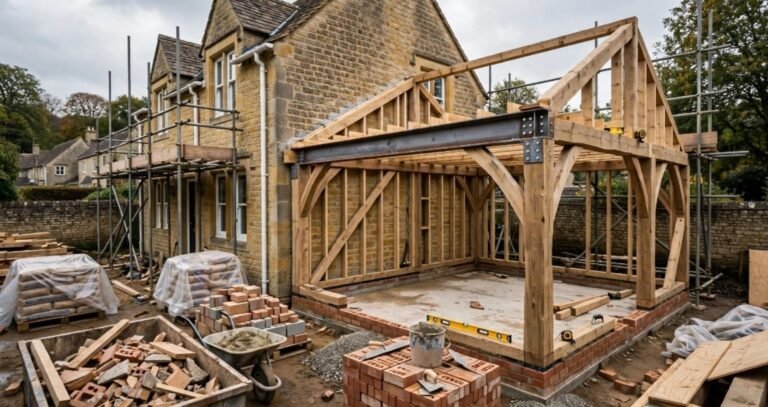
Building work often depends on information supplied by several professionals. An architect supplies drawings, an engineer specifies a beam and building control inspects regulated work. The contractor needs a buildable set of instructions, but responsibility for obtaining drawings, calculations and approvals must be agreed rather than assumed.
For a rear extension in Ealing or a side-return project in Fulham, planning permission and Building Regulations are separate questions. Some house extensions may fall within permitted development rights, subject to restrictions; most extensions still require Building Regulations approval. Work affecting a shared wall or foundations near a neighbour may also engage the Party Wall etc. Act 1996. None of these issues should first appear after a start date has been promised.
If structural drawings are incomplete, ask what has been priced and what remains subject to design. Altering the position of an opening, the type of steelwork or the route of a drain can change the sequence and cost substantially.
Residential construction companies in London: look beyond the finished photographs
A polished kitchen photograph says little about how the work was managed. Ask to see projects comparable in building type and complexity. A Victorian terrace with uneven floors and ageing services poses different questions from a modern apartment with restricted lift access. Ask how the contractor protects occupied rooms, deals with defects and records changes.
West London contractor. Construction company London New Line Construction Ltd publishes residential projects alongside refurbishment and extension services. Treat galleries as prompts for specific questions, not proof that every job follows the same pattern.
A site visit also reveals whether the proposed approach fits the property. Where will materials be stored? Is there rear access? Can waste be removed without damaging communal spaces? Will the electricity or water supply need to be isolated? These questions belong in the pricing discussion.
Construction companies in West London: allow for the street as well as the house
London projects are influenced by narrow roads, controlled parking, limited loading space and neighbouring properties. In Kensington or Notting Hill, a delivery plan and protection of shared entrances may matter as much to the programme as the joinery schedule. In a converted flat, the lease or managing agent may restrict working hours, floor finishes or changes to services. The rules must be checked for the particular address.
Small deliveries, carrying materials upstairs and restricted waste collection consume working time. Ask whether the contractor has inspected access and included the necessary arrangements rather than assuming a van can stop outside throughout the day.
See also: Financial Management for Business Success 3513543545
Choosing a construction firm in London: judge how changes will be handled
Even a careful survey cannot expose every concealed condition in an older home. The contract should explain how variations are proposed, priced and authorised before additional work proceeds. Look for a payment schedule tied to defined stages, appropriate insurance information, a clear defects procedure and an agreed handover process. Written records protect the homeowner and the builder when details change.
Compare contractors on the same stated scope rather than the headline figure. The most useful offer explains what you are buying, what remains uncertain and how the project will be controlled once work begins.